
📋 In this article
A recent study reveals that a single litre of bottled water can contain up to 370,000 plastic particles invisible to the naked eye.
Yet we continue to pay 300 times more for a resource that clogs our organs and pollutes our oceans. We’ve identified 5 reasons to stop drinking bottled water to protect your health and your budget, whilst helping you choose the best home filtration solutions.
Stop drinking bottled water to protect your body
Drinking bottled water exposes you to ingesting 240,000 plastic particles per litre. These nanoplastics migrate into the bloodstream, whilst PET releases endocrine disruptors such as antimony, threatening hormonal health.
ℹ️ Health Alert
A study by Columbia University detected up to 370,000 plastic particles per litre. These fragments cross biological barriers to accumulate in your vital organs.
Switching to a home filtration system is one of the top 5 reasons to stop drinking bottled water to protect your metabolism from the harmful effects of plastic.
The invisible scourge of microplastics and nanoplastics
Recent analyses of major brands reveal alarming figures. Each litre can contain 240,000 plastic fragments. These nanoplastics, invisible to the naked eye, are nevertheless omnipresent in every sip you take.
These particles easily pass through your intestinal walls. They eventually circulate freely in your bloodstream. Once lodged in your organs, they pose a major health risk.
Chronic ingestion of microplastics via bottled water poses a silent threat to the integrity of our cellular tissues and our metabolism.
Endocrine disruptors and polymer migration
PET plastic is not inert. Heat or prolonged storage encourages chemical leaching. These molecules then migrate directly from the container into the water we drink every day.
Antimony and phthalates act as potent endocrine disruptors. They mimic our natural hormones and disrupt essential biological functions. Your hormonal system is then thrown completely out of balance by these substances.
Health and safety remains a complex issue. You can consult the decree of 14 March 2007 to understand the quality criteria imposed on bottled water.
An environmental toll that weighs heavily on the planet
Beyond the direct impact on our health, the massive consumption of plastic places an unbearable strain on the global environment.
A carbon footprint 1,400 times greater than tap water
Manufacturing plastic requires a colossal amount of energy. Did you know that producing a 0.5-litre bottle consumes 3 litres of water and oil? It is a complete ecological nonsense.
Logistics makes the situation even worse. Transport by lorry over incredible distances fills the air with pollution. Refrigerated storage also consumes a huge amount of electricity compared to the public grid.
ℹ️ Key figures on the impact
- Oil consumption for PET
- CO2 emissions from road transport
- Industrial water wastage
The illusion of recycling and ocean pollution
We are promised a virtuous cycle, but this is not true. In Europe, around 42% of plastic bottles still escape the recycling loop. Sadly, they end up in the natural environment or on landfill sites.
In the ocean, the disaster is invisible but real. A bottle can take up to 1,000 years to break down. It fragments into toxic microplastics that poison wildlife and our food chain.
It is time to take concrete action. You can consult the targets set by the Ministry for Ecological Transition. Reducing single-use packaging has become an absolute priority.
The exorbitant cost of plastic to your annual budget
This ecological disaster comes with an absurd financial cost for households, even though a virtually free resource is already flowing into their homes.
Comparative cost analysis between bottled and tap water
Bottled water costs around 200 to 300 times more than tap water. Yet the quality is often comparable. It’s quite simply a massive price difference.
Switching to tap water saves you several hundred euros every year. You immediately gain purchasing power. Your daily hydration remains perfect without emptying your bank account.
To make the right choice, find the best water filter for your home and protect your health in the long term.
Cost-effectiveness of domestic filtration systems
The purchase of a filtration system generally pays for itself in less than six months. Whether it’s a jug or an under-sink filter, the initial investment is quickly recouped. It’s a win-win for your household.
The cost of replacement cartridges is negligible compared to weekly packs. In the long term, this financial strategy is unbeatable. You avoid unnecessary expenditure whilst filtering out unwanted microplastics.
| Water source | Estimated annual cost | Savings made |
|---|---|---|
| Bottled water (PET) | ~€100 to €300 | – |
| Gravity filter / Domestic system | ~€50 (maintenance) | Up to €250 per year |
Switch to tap water with the best filtration solutions
To make the switch with confidence, there are high-performance technologies capable of transforming your tap water into a resource of exceptional purity.
Choosing between activated carbon, gravity and reverse osmosis
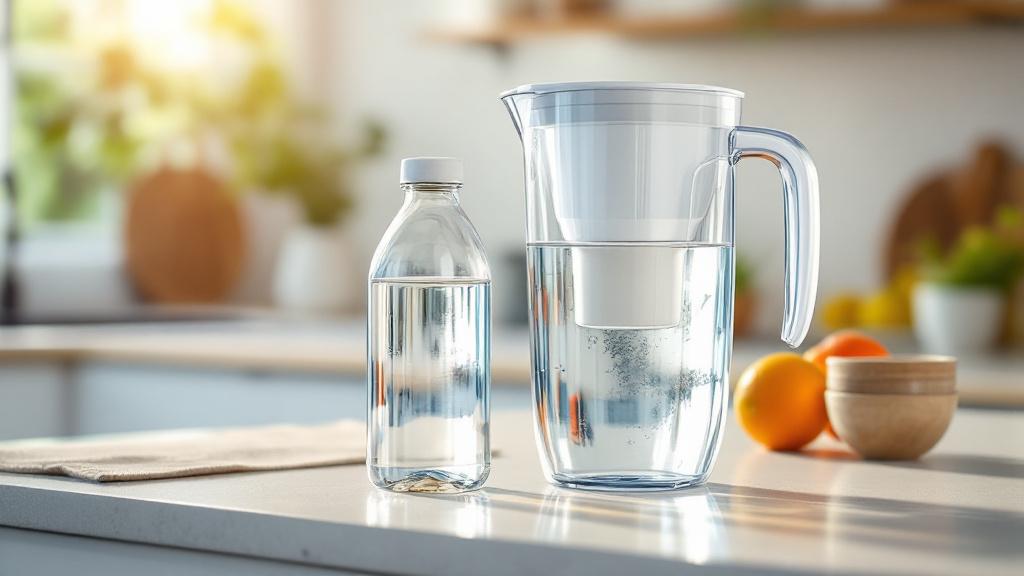
Gravity filters are proving to be formidable stand-alone systems. They operate without electricity, using natural force to trap heavy metals and pharmaceutical residues. It is a reliable and robust option.
Reverse osmosis, a cutting-edge technology, uses an ultra-fine membrane to block nitrates and PFAS. This process guarantees maximum safety for your health. Discover our selection of the Best Reverse Osmosis Systems to fit in your kitchen.
Reverse osmosis is currently the pinnacle of domestic filtration, providing water that is completely free of pollutants.
Improve the taste and remove chlorine effortlessly
Improving the taste of your water sometimes costs nothing. Simply leave your jug open to the air to let it settle. The chlorine evaporates naturally, instantly removing any unpleasant taste.
💡 Tip
Leaving water to settle in an open jug allows the chlorine to evaporate naturally and drastically improves the taste.
Hygiene remains your top priority for protecting your health. Clean your containers regularly to stop the spread of bacteria. Always opt for safe and durable materials such as stainless steel or glass.
You can read our Brita Glass review to discover an elegant glass option. This choice combines style and purity for your daily consumption.
Look after your health and your budget by removing the 240,000 nanoplastics per litre and endocrine disruptors from your daily life. Switch to high-performance filtration now to reduce your carbon footprint whilst saving hundreds of euros every year. Treat yourself to pure, sustainable water straight from the source!